



What Is Talent Central?
Talent Central is SHL's proprietary testing platform. Simply put, if the company you're applying for uses SHL's candidate screening service, you'll be taking an exam or an interview on Talent Central during your recruitment process.
As a candidate, your interaction with the platform is simple. You receive an invite link via email. After following it, you are asked to create an account (this part is a bit frustrating unless you happen to be applying to multiple SHL client companies at once).
Once logged in, your home page will show which SHL tests you're required to take and when you must take them by. You can start a test by clicking on it, but note that most exams are one-try. Once opened, you can't start over!

SHL owns a large catalogue of psychometric assessments, but some are used much more frequently than others. Let's go over which assessments you're most likely to see on your home screen.
When reading about the possible Talent Central exams, try to identify the one you're taking. Further down, we'll break down each individual test.
What Assessments Can You Take on Talent Central?
- SHL Assessments - SHL, the owner of Talent Central, has developed their own library of validated pre-employment exams. Their most famous are the Occupational Personality Questionnaire (OPQ) and the General Ability Test. SHL's assessments range from personality exams to cognitive aptitude tests. We'll cover the big ones further down the page.
- Kenexa Tests - In 2021, SHL acquired the rights to a series of psychometric exams initially developed by IBM. These are known as the Kenexa Tests, and they are now also taken on Talent Central.
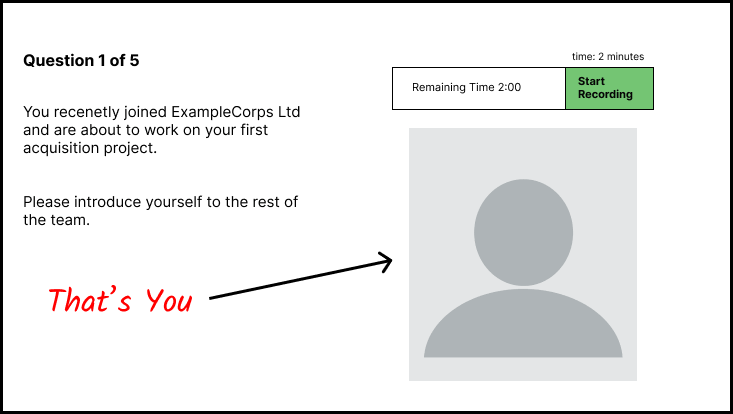
- SHL Video Interview - To compete in the modern testing environment, SHL increasingly integrates AI into its procedure. The Smart Interview On Demand (ODSI) is a structured webcam interview analysed using artificial intelligence.
Preparation for Talent Central tests often makes a big difference. The skills measured by the exams are typically ones that can be honed with just a few pre-test simulations.
But preparation can differ depending on the test you'll be taking. Let's go over the most common SHL exams.
What Companies Use Talent Central?
Quite a few, actually. Some of their highest-profile clients in the UK include Northern, Barclays PLC, Royal Bank of Scotland, and Thames Water.
Talent Central (SHL) Cognitive Aptitude Tests
SHL General Ability (Verify G+)
The SHL Verify G (also known as the SHL Verify G+ or SHL general ability test) is among SHL's most ubiquitous assessments because it's a three-in-one: inductive reasoning, deductive reasoning, and numerical reasoning.
This combination of logical and mathematical thinking is often seen as encapsulating cognitive skills in a nutshell, and to employers, that's just what they're looking for.
Importantly, there are two variations of the General Ability Test:
- Multiple-choice - traditional testing format where you choose the correct answer out of several options.
- Interactive - a more modern format which includes drag-and-drop, open questions, and other interactive elements.
The questions on this assessment involve pattern recognition, graph and chart reading, and scheduling. These feel daunting because they feel more like puzzles than everyday tasks you might actually deal with. This is why many candidates use practice tests to gain a "feel" for the assessment and reduce testing anxiety.
The SHL Numerical Reasoning Test
Some companies choose to administer a test consisting solely of numerical questions. This will especially be true of companies that require employees to be well-versed in data management.
This is why this isn't a test of your ability to do math (SHL also has one for that - the calculation test). To really drive this point home, you are allowed to use a calculator.
Instead, the SHL Numerical is more about thinking with numbers. Deriving meaningful information from charts, graphs, and tables, and making informed decisions based on numerical data.
SHL Verbal Reasoning Test
SHL also offers verbal reasoning and reading comprehension assessments.
For these, test-takers have to read a prose passage before answering a set of questions that gauge their understanding. Depending on the test, the questions can be either multiple-choice or true-or-false.
These three tests are very common, but they are by no means an exhaustive list. Some companies hiring for clerical jobs use the SHL Checking Test, for example. Mechanical roles often require the SHL Mechanical Comprehension Test.
Since every employer customises which assessments are included in their battery, our prep-course is all-inclusive and contains all these.
Talent Central (SHL) Personality Tests
Personality tests are commonplace in recruitment.
There are several reasons why a hiring company may choose to administer a personality assessment. For one, most employers want to promote from within the company, and obtaining a comprehensive profile of each employee's personality traits on day one allows managers to identify leadership potential. It can also inform managers on what motivates each individual.
Additionally, organisations often cultivate a certain work culture, and they're interested in hiring candidates who are a good fit.
The Occupational Personality Questionnaire is a unique personality test that focuses specifically on workplace behaviour. Its most recent version, the OPQr, uses forced-choice questions to rank job applicants on a set of 32 important traits that fall into three broad categories: relationships and people skills, thinking style, and emotional style.
What Are Forced-Choice Questions?
Most traditional personality questionnaires present you with a statement and ask you to indicate whether you agree or disagree. The biggest issue these tests face is that it's very easy for a less-than-honest candidate to agree with statements that reflect desirable traits like loyalty and work ethic, and to disagree with less desirable statements.
The forced-choice format deals with this problem by forcing you to make a choice between two or more statements that are equally desirable or undesirable.
For example, which of the following more aptly describes you, "I always finish a task once I've started it" or "I take other people's opinion deeply into consideration before calling a shot"?
Another common personality test used by SHL is the SHL Motivational Questionnaire.
This one requires you to rank your level of agreement with a set of statements. All the statements ultimately relate to your motivations: what gets you to perform better. Is it a feeling of belonging? Is it pride in your achievements? Is it a knack for problem-solving?
The answers to this question reveal what kind of worker you are, and where you'd be best placed within the company.
Frequently Asked Questions
Yes. Talent Central is owned by SHL, a very well-trusted pre-employment testing company. Their clients include major companies, organisations, and even government agencies such as those in Scotland and New South Wales.
Yes. The Talent Central platform supports accessibility tools such as screen readers, voice control software, screen magnification, keyboard-only navigation, and alternative color schemes. These are built into the platform itself- you don't have to request to use them.
SHL tests can also be extended for candidates who need more time. To use this accommodation, you'll have to talk to your recruiter and receive permission.
It depends. On the recruiter's side, Talent Central offers a list of anti-cheating measures, which include live proctoring. This would involve tracking your screen and/or your mouse movements. It might also require you to have your camera turned on.
However, the decision to use these tools rests with the employer. In any case, you will be notified before taking the test if any of these proctoring measures are active.
The SHL tests are designed to be selective. If anyone could pass the test, they wouldn't do hiring companies much good. Additionally, they're not graded by percentage of correct answers but by how well you do compared to past test-takers.
All this is to say - yes, the SHL tests can be challenging, and shouldn't be taken lightly.
All-Inclusive SHL Prep Course
Related Resources:


