 Free Talogy Cubiks Online Test Practice: Logiks Sample Questions (2026)
Updated: 10 February 2026
Talogy's Cubiks Online psychometric tests assess numerical, verbal, and abstract reasoning. Many candidates find them challenging due to strict time limits, and often the key to success lies in familiarity with the question styles and focused practice.



Overview Of The Cubiks Online Assessments
The Talogy Cubiks assessments are commonly used in graduate, professional, and managerial recruitment.
While Talogy offers several Cubiks-based tools, the core assessments fall into two main categories, ability tests and personality questionnaires:
- Logiks General: There are two versions of the Logiks General tests - Logiks General (Intermediate) and Logiks General (Advanced) - designed for different levels of recruitment. Both are cognitive ability tests that measure abstract, numerical, and verbal reasoning under time pressure, though the structure and difficulty differ slightly.
- P.A.P.I. (Personality and Preference Inventory): Cubiks also offers multiple PAPI assessments, with PAPI3+ and PAPI-I being the most widely used. These personality questionnaires explore work styles, motivations, and behavioural preferences.
This free Cubiks practice page focuses specifically on the Logiks General aptitude tests, and includes free Cubiks Logiks practice questions for both the Intermediate and Advanced levels:

For more comprehensive preparation, we also offer full prep packages for Logiks General (Intermediate), Logiks General (Advanced), and PAPI, as well as an All-Inclusive Cubiks PrepPack that combines all three assessments with an additional situational judgement test (SJT) component and in-depth preparation guides.
Ace Your Cubiks Assessments
Check out all of our expert-created Cubiks preparation packages that'll get you confident for test day.
Free Logiks General (Intermediate) Practice Test
The Logiks General (Intermediate) test is commonly used for graduate schemes and entry-level roles. While the questions themselves are not overly complex, the strict time limits make this assessment challenging.
Candidates have 12 minutes to answer 50 questions, split across three sections, with 4 minutes allocated to each section:
- Verbal Reasoning: 24 questions
- Numerical Reasoning: 16 questions
- Abstract Reasoning: 10 questions
Because all sections share the same short time limit, success depends on working quickly while maintaining accuracy. Practising each section individually is one of the most effective ways to build speed, confidence, and familiarity with the question formats.
Part 1: Logiks General (Intermediate) Verbal Reasoning Practice Test
Verbal reasoning questions measure how well you understand written information and draw logical conclusions based only on the text provided.
Careful reading and avoiding assumptions are key skills tested in this section.
Try the Logiks General (Intermediate) verbal reasoning practice questions below:
⭐️ Golden Tip: In Logiks Intermediate verbal reasoning, focus on key details and subtle language cues. Extract the essential information efficiently and consider the overall context to choose the most accurate answer. Regular practice will improve both speed and accuracy.
 Get our Cubiks Logiks (Intermediate) PrepPack for more.
Part 2: Logiks General (Intermediate) Numerical Reasoning Practice Test
Numerical reasoning questions focus on interpreting data presented in tables, charts, or graphs and performing basic calculations under time pressure.
Accuracy and speed are equally important.
Try the Logiks General (Intermediate) numerical reasoning practice questions below:
⭐️ Golden Tip: In the Logiks Intermediate numerical reasoning section, time pressure is the main challenge. Learn quick-solving techniques, like eliminating obviously wrong answers first, to speed up your calculations. Regular practice helps you answer accurately under the clock.
Get our Cubiks Logiks (Intermediate) PrepPack for more.
Part 3: Logiks General (Intermediate) Abstract Reasoning Practice Test
Abstract reasoning questions assess your ability to identify patterns, rules, and logical relationships using shapes and diagrams rather than words or numbers.
These questions test how quickly you can recognise visual logic and adapt to changing patterns.
Try the Logiks General (Intermediate) abstract reasoning practice questions below:
7. Which block completes the following sequence:

Possible answers:
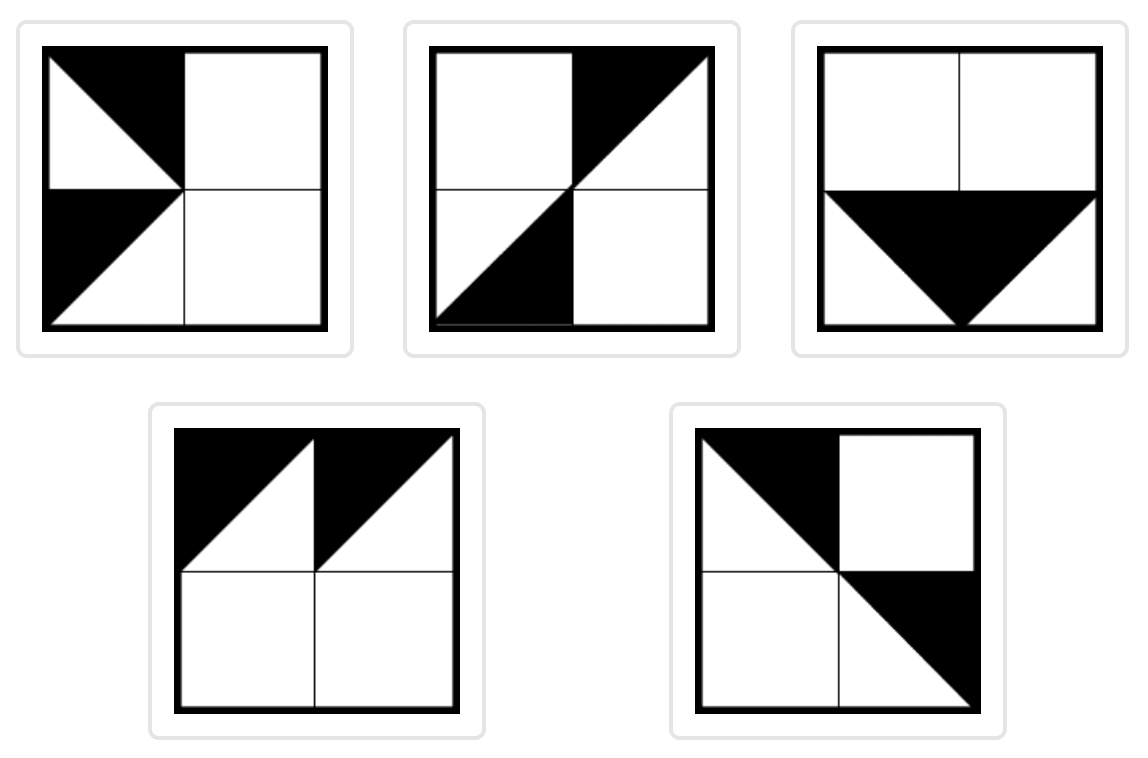
The correct answer is (1):
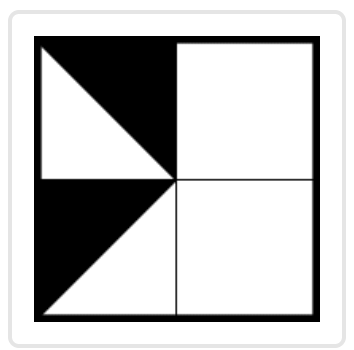
Explanation:
The top left triangle remains in its position throughout the frames and never moves. This means you can rule out answers (2), (3), and (4).
The second triangle moves one position clockwise in each step. This leaves out answer (1) as the correct one.
8. Which block completes the following sequence:

Possible answers:
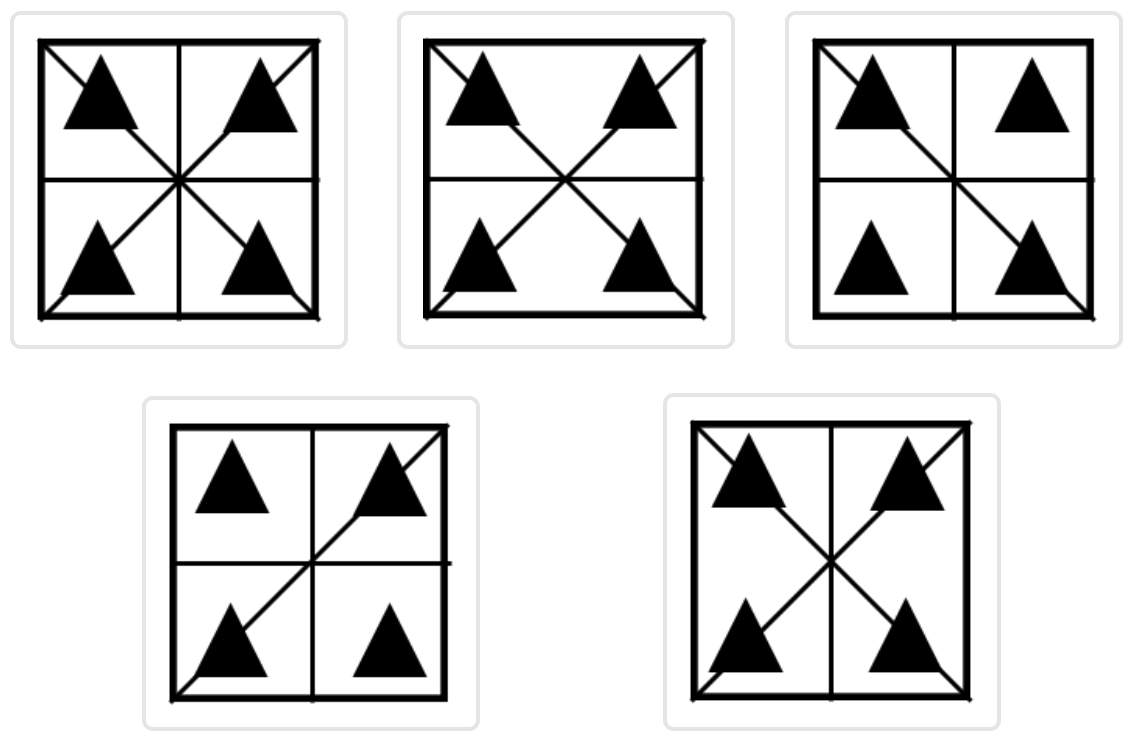
The correct answer is (4):
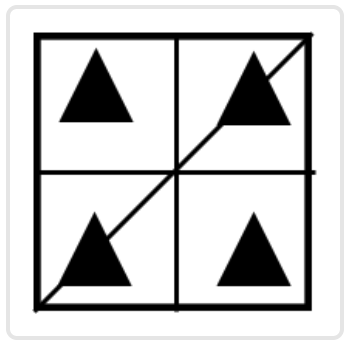
Explanation:
There are three rules governing this series:
- Every two steps a triangle is added.
- Every two steps a line is added.
- Every step the lines make a 45° rotation in an anticlockwise manner.
The only answer that fits all these rules is answer (4).
9. Which block completes the following sequence:

Possible answers:
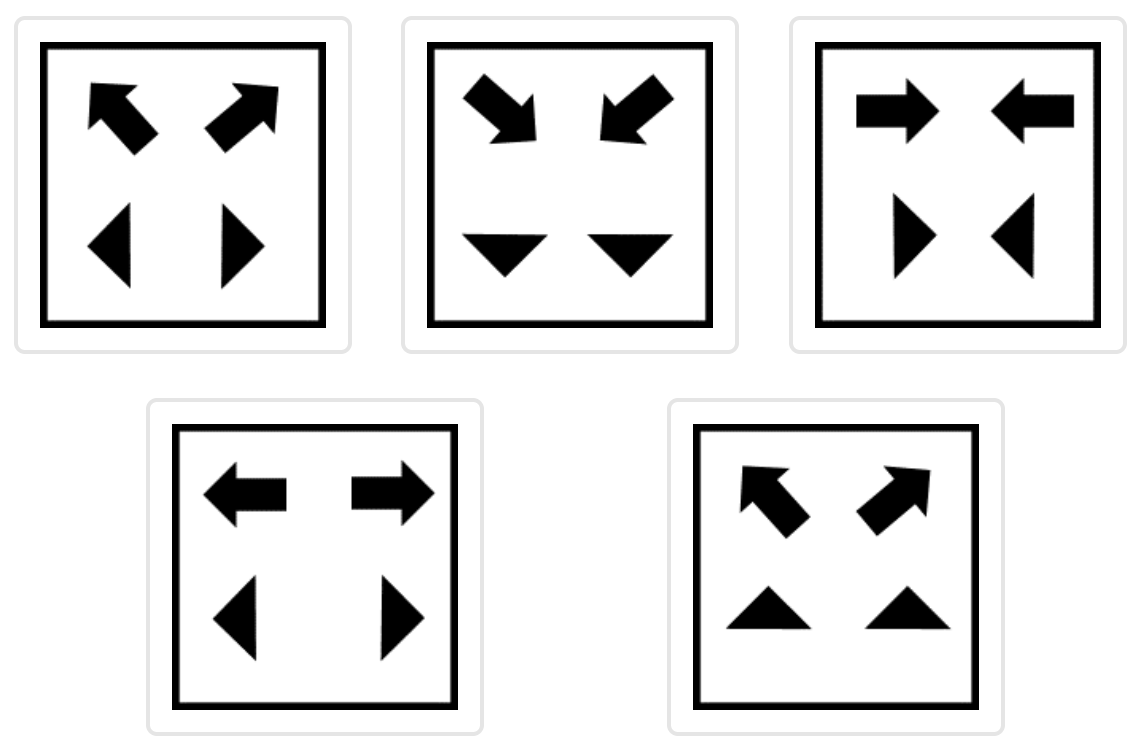
The correct answer is (1):

Explanation:
The upper arrows rotate 45° in each step. The one on the left rotates clockwise, and the one on the right rotates anti-clockwise.
The lower arrows (the triangles) rotate 90° in each step. The one on the left rotates anti-clockwise, and the one on the right rotates clockwise.
Note that, based on the first rule, you can rule out answers (2), (3), and (4), and based on the second rule, you can rule out answers (2), (3), and (5).
⭐️ Golden Tip: In the Logiks Intermediate abstract reasoning section, focus on spotting recurring visual patterns and rules quickly. Start with simple patterns and gradually work up to more complex ones. Practising regularly will help you solve problems faster and more confidently.
Ace Your Logiks General (Intermediate) Test
Want more practice? Improve your chances of success with our in-depth Talogy Cubiks Logiks General (Intermediate) PrepPack.
Free Logiks General (Advanced) Practice Test
The Logiks General (Advanced) test is commonly used for professional, managerial, and leadership roles. The questions are more challenging and longer, requiring careful reasoning under time pressure.
Candidates have 20 minutes to answer 30 questions, split across three sections:
- Verbal Reasoning: 12 questions in 8 minutes
- Numerical Reasoning: 8 questions in 8 minutes
- Abstract Reasoning: 10 questions in 4 minutes
The Advanced test places greater emphasis on complex problem-solving and interdisciplinary reasoning. Practising each section individually helps improve speed, accuracy, and confidence, giving you the best chance of performing well under the stricter time constraints.
Part 1: Logiks General (Advanced) Verbal Reasoning Practice Test
Advanced verbal reasoning questions typically include longer passages and more nuanced answer options, testing precision as well as comprehension.
The below sample questions for the Logiks (Advanced) verbal reasoning practice test are based on the following piece of text:
Studies show that 88% of children treated with gene therapy - treating diseases by correcting a patient's faulty genes - for severe combined immune deficiency, or SCID, have had their immune systems restored.
The best treatment for this rare disease is a bone marrow transplant from an immunologically matched sibling. When no matched donor is available, unmatched donors, such as parents, are recruited; these transplants are only around 70% successful. The success of gene therapy surpasses the success of these unmatched donor transplants.
These overall impressive success rates are countered by another study's findings that a quarter of the subjects in Europe who have received gene therapy for a form of the disease that is linked to the X-chromosome have developed leukaemia, and one has died. The development of leukaemia is thought to have been induced by a component in the modified virus the researchers used to insert the correct gene into the children's cells. As for the 30 children worldwide, who have been treated with gene therapy for another form of SCID, marked by a deficiency in the enzyme adenosine deaminase (ADA), none has developed leukaemia.
The study's medical researchers maintain that gene therapy is still a better alternative than most conventional treatments for X-linked SCID because 19 of the 20 children who have received gene therapy for X-linked SCID are still alive.
Using the information in the text above, answer the Logiks General (Advanced) verbal reasoning practice questions below:
⭐️ Golden Tip: Logiks Advanced verbal questions test your ability to analyse complex text. Break passages into key points and focus on extracting relevant information to choose the most accurate answers. Practising this improves speed, accuracy, and confidence.
Get our Cubiks Logiks (Advanced) PrepPack for more.
Part 2: Logiks General (Advanced) Numerical Reasoning Practice Test
Numerical questions at the advanced level usually involve larger datasets or multi-step calculations, making time-efficient problem-solving essential.
The below sample questions for the Logiks (Advanced) numerical reasoning practice round are based on the following dataset:
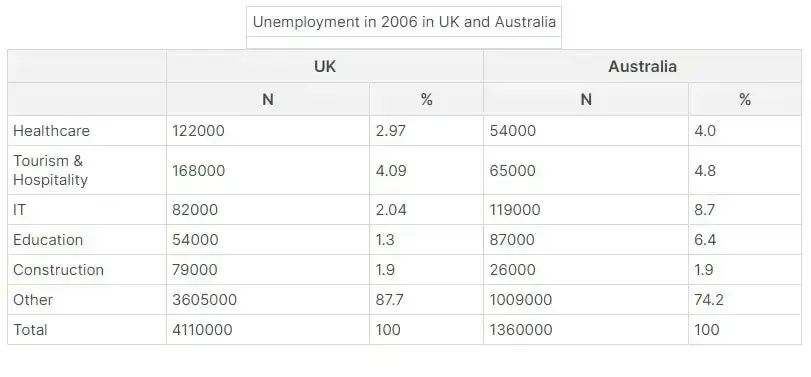
Using the table above, answer the Logiks General (Advanced) numerical reasoning practice questions below:
⭐️ Golden Tip: Logiks Advanced numerical questions focus on interpreting complex tables, charts, and graphs. Break data into manageable parts and practise mental math ahead of time to build the skills required to solve problems quickly and accurately. Timed practice helps improve both speed and precision.
Get our Cubiks Logiks (Advanced) PrepPack for more.
Part 3: Logiks General (Advanced) Abstract Reasoning Practice Test
Advanced abstract reasoning questions often involve multiple rules changing at once, requiring flexible thinking and strong pattern recognition.
Try the Logiks General (Advanced) abstract reasoning practice questions below:
6. Which block completes the following sequence:

Possible answers:
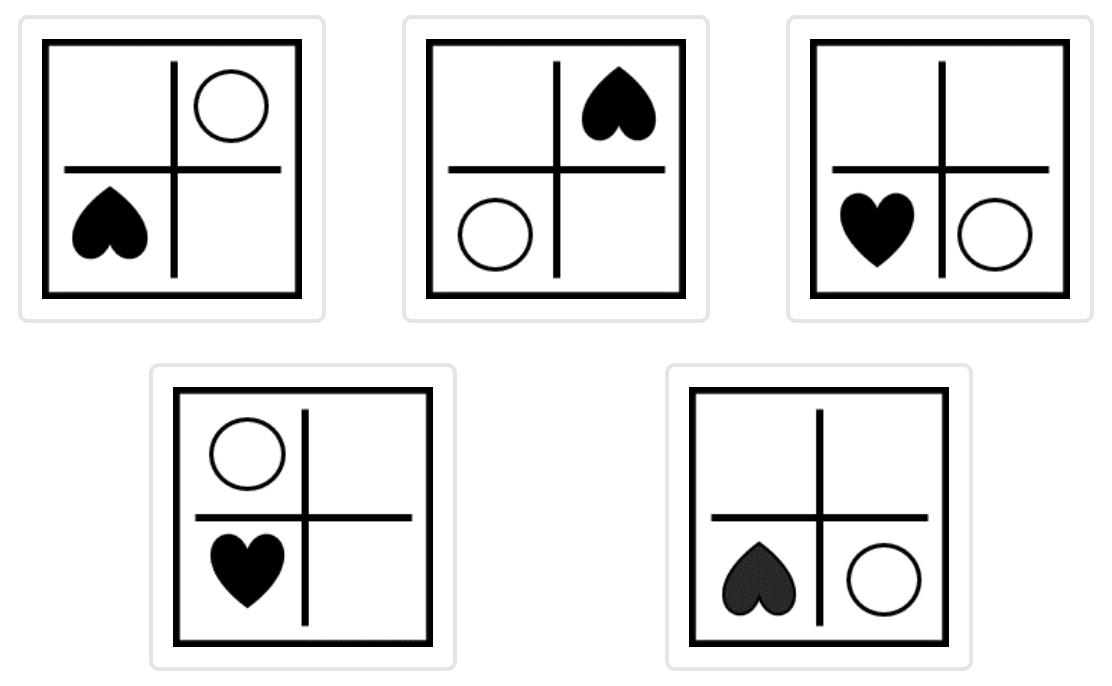
The correct answer is (5):
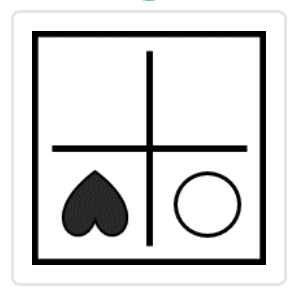
Explanation:
The two objects in this question move in a different pattern:
- The circle alternates its position between the upper left and the lower right sections.
- The heart moves around one section in each step, clockwise, and rotates 180° in each step.
When the circle and the heart land on the same spot, the heart covers the circle.
This means that, in the missing frame, the circle must be in the lower right section, so you can rule out answers (1), (2), and (4).
The heart is in the same spot in both answer (3) and (5), but only in answer (5) does it stand in the right direction.
7. Which block completes the following sequence:

Possible answers:
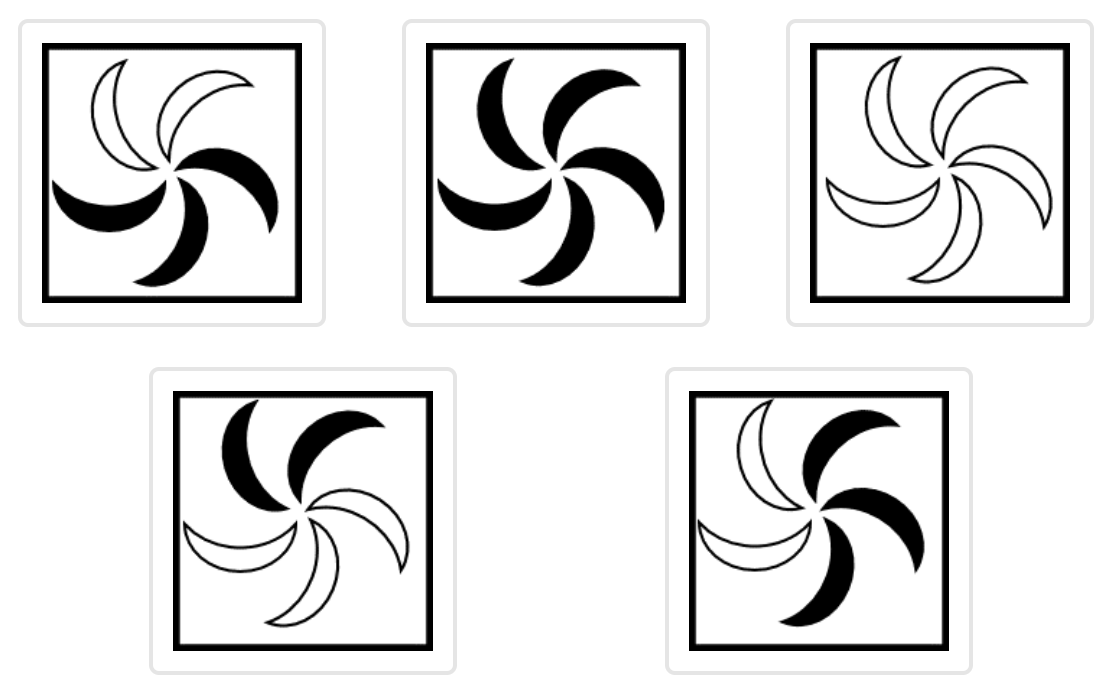
The correct answer is (5):

Explanation:
In each step, another petal of the flower changes its colour in consecutive order. Once all the petals change their colour, they change back again in the same order.
So, the missing frame should have two white petals and three black ones.
Both answers (1) and (5) fit that pattern, but only answer (5) continues the correct order of colouring that started in the fifth frame.
8. Which block completes the following sequence:

Possible answers:
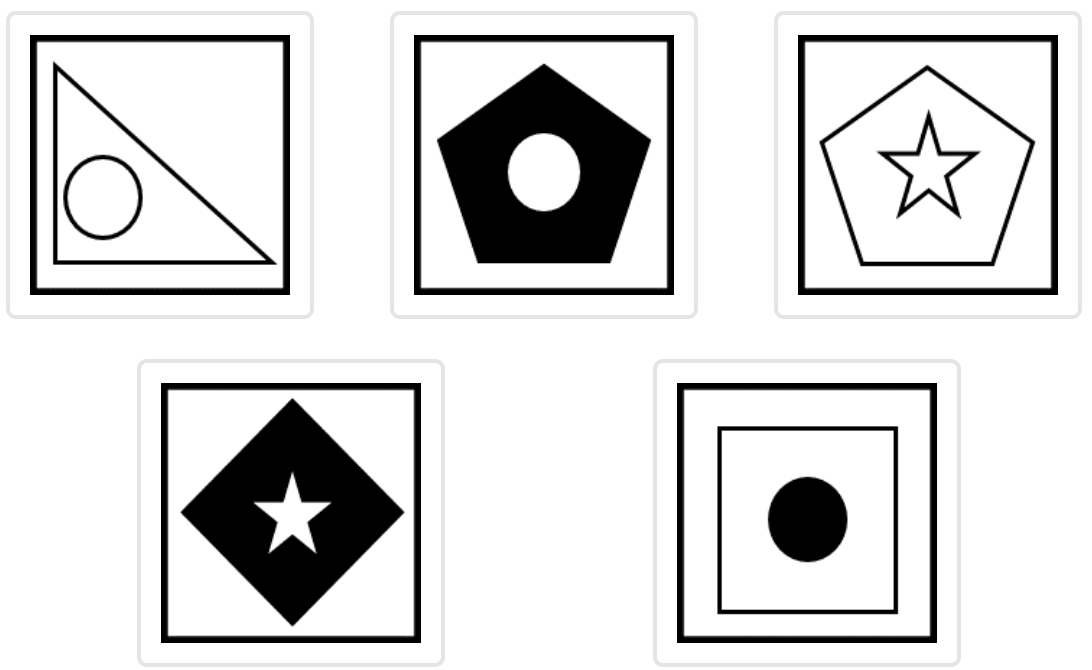
The correct answer is (3):

Explanation:
There are three rules in this question, but you only need to recognise two to reach the answer.
The inner figure alternates in each step between a black circle and a white star. This means the inner figure in the missing frame must be a white star, so you can rule out answers (1), (2), and (5).
To determine between answers (3) and (4), you only need to recognise one of these rules:
- The outer figure changes its shape in each step in this order: Square, pentagon, triangle, diamond. This means the outer figure in the missing frame must be a pentagon. The only answer that fits this pattern is (3).
- The outer figure changes its colour to black every two steps, so the outer figure in the missing frame must be white. The only answer that fits this pattern is (3).
Therefore, (3) is the only answer that fits.
⭐️ Golden Tip: Logiks Advanced abstract reasoning is tougher and time pressure is greater. Focus on recognising patterns quickly and manage your time carefully so you'll have the chance to attempt all questions. Practising under timed conditions will help you improve speed and accuracy.
Ace Your Logiks General (Advanced) Test
Want more practice? Improve your chances of success with our in-depth Talogy Cubiks Logiks General (Advanced) PrepPack.
Why Practise Before A Cubiks Test?
Cubiks Logiks tests are highly sensitive to preparation. Many capable candidates underperform simply because they are unfamiliar with the question formats and time pressure.
Practising Cubiks-style questions helps you improve speed without sacrificing accuracy, recognise common reasoning patterns, manage time more effectively across sections, and feel more confident on test day.
Free practice questions are an excellent starting point before attempting full-length test simulations, while our expert-created PrepPacks will give you all the tools you need to ace your Cubiks assessment. You can also check out our guide to better understanding Talogy test scores to become more familiar with what success would look like for you.
Ace All Your Cubiks Assessments
Don't leave your Cubiks assessment results to chance: Get ready with our all-inclusive Talogy Cubiks PrepPack and head into your test with confidence.

FAQs
You can practise by working through sample questions for abstract, numerical, and verbal reasoning. Start with short sets to understand the question formats, then gradually increase the number of questions under timed conditions. This builds familiarity and helps reduce anxiety on test day.
Focus on recognising visual patterns, sequences, and transformations quickly. Begin with simple patterns, then progress to more complex arrangements. Practising under timed conditions helps you develop speed and accuracy while training your brain to spot rules efficiently.
Work on mental arithmetic and shortcuts for common calculations. Learn to quickly extract relevant data from tables, charts, and graphs. Practising multiple timed questions helps you balance accuracy with speed, ensuring you can answer all questions within the strict time limits.
Read passages carefully and focus on keywords and subtle distinctions. Practise identifying main ideas, conclusions, and supporting details. Time yourself to improve reading speed without sacrificing comprehension, and develop the habit of eliminating clearly incorrect answer options first.
Regular, consistent practice is key. Aim for short, daily sessions rather than occasional long ones. Even 20 - 30 minutes a day can make a noticeable difference, helping you retain strategies and reduce test-day anxiety.
Yes, realistic practice tests are designed to match the question formats, difficulty levels, and timing of the real Cubiks Logiks assessments. Using these allows you to experience the pressure of the test environment and fine-tune your speed and accuracy.
Absolutely. Familiarity with question types, time limits, and recurring patterns significantly improves performance. Practising helps you develop solving strategies, increases confidence, and reduces mistakes caused by uncertainty or misreading questions.
Keep a record of your scores, accuracy, and time taken for each practice set. Note which question types give you the most difficulty, then focus on these areas in future sessions. Tracking progress shows improvement over time and highlights remaining weaknesses.
Avoid rushing through questions without understanding the format, neglecting weaker areas, and ignoring timing. Don’t rely solely on untimed practice - speed under pressure is crucial. Also, avoid practising in short bursts without reflection. Instead, review mistakes and learn from them.
More On Talogy & Cubiks
If you're preparing for Talogy and Cubiks assessments, you might find these resources helpful:
- Talogy All-Inclusive PrepPack (Logiks, PAPI, and SJT)
- Talogy Logiks General (Intermediate) PrepPack
- Talogy Logiks General (Advanced) PrepPack
- Talogy PAPI PrepPack
- Talogy Caliper PrepPack
Also check out our full UK Talogy Assessment guide and our guide to understanding Talogy Cubiks test scores.
We at JobTestPrep find the assessment tests world highly diverse and fascinating. If you're looking to deepen your knowledge in the aptitude tests world or you want some extra practice before your test, we've got you covered!
Check out these fantastic FREE practice tests:
Free Abstract Reasoning Test | Free Aptitude Test | Free Cognitive Test | Free Critical Thinking Test | Free Inductive Test | Free Mechanical Reasoning Test | Free Numerical Reasoning Test | Free Personality Test | Free Psychometric Test | Free Spatial Reasoning Test | Free Verbal Reasoning Test
Also check out these similar test providers:
Hogan | Korn Ferry | Predictive Index | Saville | SHL | Thomas


