Saville Wave Assessment Preparation Expert Guide
Published: January 22, 2026 | 6 min read
When candidates approach the Saville Wave Professional Styles or Saville Wave Focus Styles assessment, most focus on individual questions rather than understanding what employers are actually measuring. The fundamental truth: success isn't about achieving maximum scores across all clusters. A Saville Wave personality test profile signalling exceptional fit for strategic consulting might indicate poor alignment with operational roles.
This Saville Wave test preparation guide reveals the strategic elements most candidates overlook—what employers measure across four personality clusters, how to align your authentic strengths with roles where you'll genuinely thrive, and how the Saville Assessment's sophisticated design reveals your true preferences. You'll approach the Saville Wave with confidence and strategic clarity.
How the Saville Wave Assessment Actually Works
The Saville Wave personality test uses a sophisticated two-stage approach combining Likert scale questions (rating statements from 1-9) with forced-choice questions. This hybrid method is designed to reveal your genuine preferences, not your aspirational self-image.
Here's the mechanism
You'll first encounter positively-worded statements like "I enjoy leading team discussions" or "I excel at analytical problem-solving." These are intentionally appealing, making most candidates rate them highly. If you rate multiple statements with the same score (say, giving both an 8), the assessment later presents those same statements as a forced-choice question, requiring you to select which is "most like you" and which is "least like you."
Why this matters
This design minimises response bias and reveals authentic preferences by forcing genuine differentiation between equally desirable traits. The Saville Wave forced-choice mechanism exposes inconsistencies in inflated response patterns.

Strategic Assessment Tip:
The key to responding efficiently is thoughtful differentiation from the start:
- Rate honestly, not uniformly: A statement you rate 7 versus 8 reflects real self-awareness and reduces forced-choice questions later.
- Understand motives versus talents: "I enjoy..." asks about motivation; "I am skilled at..." asks about capability. The goal is to align these when you genuinely both enjoy and excel at something. If you're skilled at detailed analysis AND enjoy it, rate both highly. If you're skilled but don't enjoy it, rate them differently—this honest reflection is what employers want to see.
- Reflect your genuine preferences: If you truly prefer teamwork over independent work, rate them accordingly. This isn't choosing one or the other entirely—it's honest differentiation.
Remember: The Saville Wave personality test rewards genuine self-awareness and authentic motive-talent alignment, not attempting to appear exceptional at everything.
Understanding the Four Clusters: Matching Your Profile to Role Requirements
The Saville Wave test measures personality across four distinct clusters, and understanding what different roles require in each cluster is essential for strategic career decisions. Each Saville Wave cluster reveals critical information about how you work, but the key insight is that different roles require dramatically different Saville Wave profiles across these dimensions.
The Thought Cluster: Your Cognitive Approach to Work Challenges
How your mind engages with professional challenges forms the foundation of the Saville Wave Thought cluster. This dimension explores whether you naturally gravitate towards conceptual strategy, meticulous analysis, or innovative experimentation. Employers examining your Saville Wave test results want to understand your default cognitive mode when facing workplace problems.
Strategy consulting firms seek candidates whose Thought profiles demonstrate exceptional capability for dissecting complex business problems whilst simultaneously generating novel frameworks. Your results need to show you can toggle between systematic analysis and creative synthesis.
In contrast, financial services organisations prioritise candidates showing methodical, detail-focused analysis over blue-sky conceptual thinking. They're examining whether your cognitive style naturally includes double-checking calculations and maintaining accuracy under pressure—traits that consulting firms also value, but weight differently against innovation.
Technology companies approach the Thought cluster differently again. Product development roles require cognitive flexibility—generating creative solutions whilst maintaining practical feasibility assessments. Neither pure innovation nor pure analysis suffices; successful candidates demonstrate integrated thinking across both dimensions.
The Influence Cluster: Different Roles Need Different Impact Styles
Professional influence manifests differently across workplace contexts. The Saville Wave Influence cluster captures these variations, but Saville Wave test success requires understanding that "influence" means something entirely different for sales professionals, project coordinators, and technical experts.
Sales organisations reviewing Saville Wave assessment results prioritise candidates comfortable persuading, directing conversations, and closing decisions. High scores in collaborative consensus-building might actually raise concerns if the role demands directive influence.
Project management and operational roles demand completely different patterns—coordinators who excel at stakeholder alignment and facilitate productive discussions across competing priorities.
Technical professionals face unique influence requirements. Software engineers and researchers influence primarily through demonstrating expertise and communicating complex ideas accessibly.
Client-facing consulting presents the most demanding requirements, needing the full spectrum—persuasive presentation skills, relationship cultivation capabilities, and project leadership abilities.
The Adaptability Cluster: Matching Your Change Response to Role Reality

The Saville Wave Adaptability cluster reveals how you process and respond to workplace uncertainty and disruption. Different organisations want fundamentally different Saville Wave adaptability profiles. Presenting high comfort with constant disruption to a stability-focused organisation can eliminate you as surely as showing resistance to change in a dynamic startup.
Startup environments and consulting firms actively select for candidates who thrive amidst ambiguity. They're examining Saville Wave personality test results for evidence that uncertainty energises rather than stresses you.
Established organisations in regulated sectors seek opposite signals—candidates demonstrating thoughtful, measured responses to change rather than embracing disruption enthusiastically.
Management consulting presents fascinating requirements because consultants face both scenarios. Individual projects demand extreme adaptability whilst consulting firms maintain structured internal processes.
Operations and project management roles require pragmatic adaptability—problem-solving when circumstances shift without constantly seeking change.
The Delivery Cluster: Your Execution and Completion Style
The Saville Wave Delivery cluster captures how you organise, execute, and complete work. Effectiveness depends entirely on matching your natural delivery approach to organisational expectations. Some contexts demand meticulous planning and flawless execution. Others prioritise rapid iteration over perfection.
Operations roles, project management, and financial careers require exceptionally high Saville Wave Delivery scores across planning, organisation, and quality focus.
Creative agencies and startup environments value dramatically different approaches—shipping work quickly, learning from feedback, and maintaining momentum despite imperfection. Extremely high planning scores might actually raise questions in these contexts.
Financial analysts and compliance professionals need maximum Delivery scores specifically around accuracy and thoroughness. A single calculation error can cost millions; organisations need certainty your natural tendencies align with this reality.
Understanding Motives Versus Talents: The Career Longevity Predictor
The Saville Wave's measurement of both motivations and talents creates uniquely powerful insights. You might possess genuine capability in areas that don't energise you, creating short-term performance but long-term dissatisfaction. Alternatively, high motivation with developing talent reveals learning agility—you're energised to build capabilities, suggesting persistent development effort.
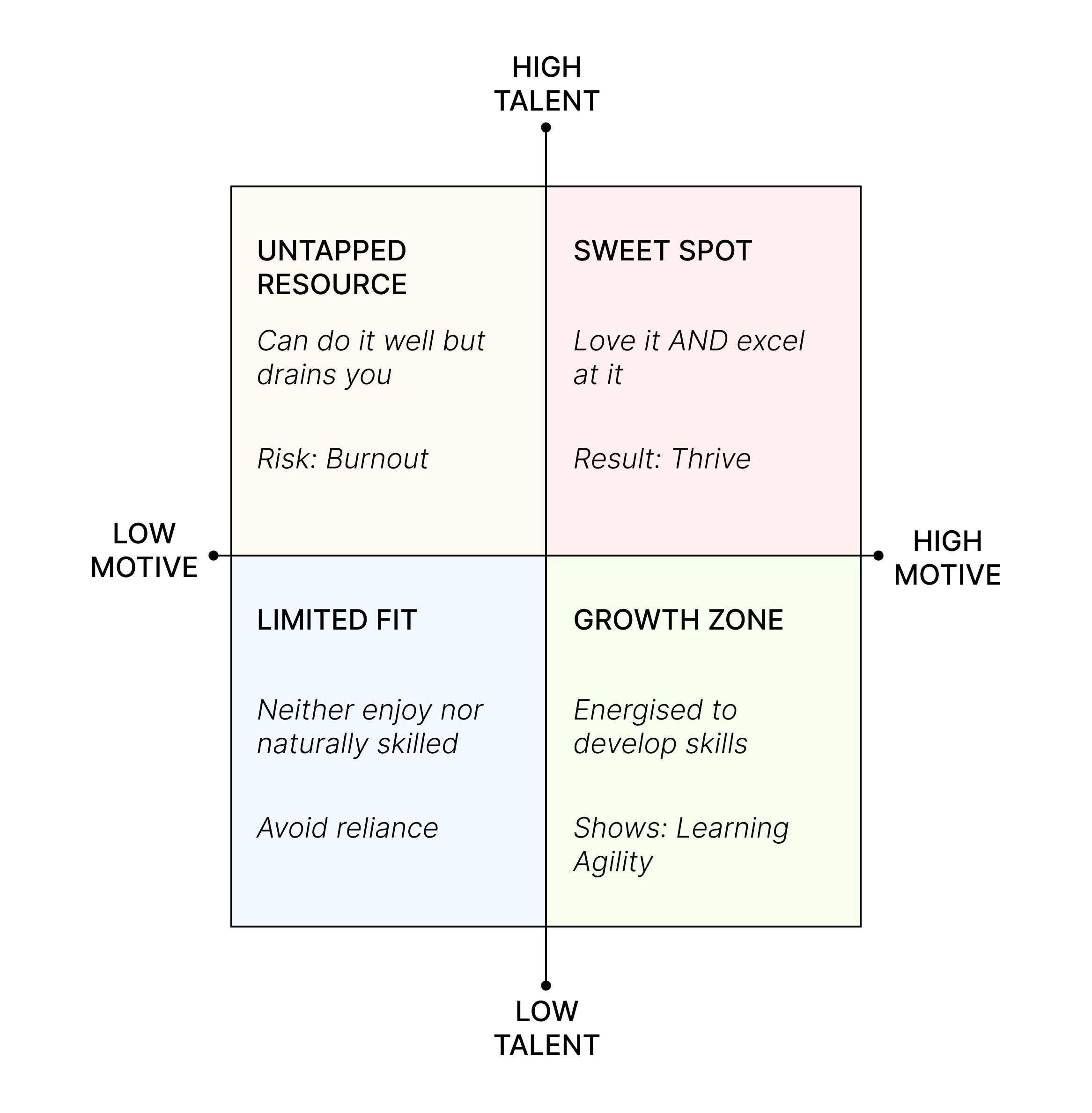
When Saville Wave results show high motivation and high talent in the same areas (top right quadrant), employers recognise your sweet spot where you'll sustain excellence. Lower motivation paired with high talent (top left quadrant) creates concerning patterns—you might deliver initially, but sustained performance becomes questionable as the work drains rather than energises you.
Mindset and preparation tips
Think of this format as a combination of technology and behavioral psychology. The AI system is looking for consistency, composure, and clarity. You don’t need to act robotic or overly rehearsed; instead, focus on presenting a calm, confident version of yourself.
- Practice the format – Record yourself answering sample interview questions to get comfortable speaking naturally to a camera without feedback. Watching yourself back will help you notice habits like avoiding eye contact or speaking too quickly.
- Perfect your environment – Choose a quiet, well-lit space with a neutral background. Natural light is ideal, but if that’s not possible, position a lamp in front of you rather than behind. Avoid cluttered or distracting settings that could pull focus away from you.
- Dress as you would for an in-person interview – Even though you’re speaking to a camera, appearance still matters. Business casual attire is typically best: solid colors (especially mid-tone blues or grays) read better on camera than bright whites or patterns. Avoid shiny fabrics, noisy jewelry, or overly casual clothing. Sitting up straight with good posture projects confidence and professionalism.
- Mind your non-verbal communication – Look directly into the camera lens, not at your own image on screen. Smile naturally, use small gestures, and maintain steady body language. The goal is to appear engaged, confident, and approachable.
- Take advantage of the prep time – Most AI platforms give you a few seconds to collect your thoughts before recording begins. Use that time to breathe, center yourself, and mentally outline your main points.
- Stay authentic – AI tools are designed to detect confidence and engagement, not perfection. You don’t need to sound scripted or overly polished. Speak as you would in a professional conversation: calm, clear, and genuine.
Strategic Preparation Beyond Surface-Level Responses
Effective Saville Wave preparation requires developing genuine understanding of what your target role requires across all four clusters. Begin by thoroughly analysing your role's actual requirements. Which cluster matters most? Strategy consulting weights Thought heavily. Sales positions prioritise Influence. Startup environments emphasise Adaptability. Operations careers demand Delivery excellence.
Research organisational culture beyond surface-level statements. Do they truly embrace innovation despite claiming to value it, or do they primarily reward careful execution? Understanding operational reality versus stated values helps you assess whether your authentic Saville Wave profile matches their environment.
When completing your Saville Wave assessment, focus on consistency over second-guessing individual responses. The framework examines patterns across many items rather than weighing single responses heavily. Trust that honest, consistent responses revealing your genuine work preferences serve your interests better than attempting to game the assessment.
Finding Roles Where You'll Actually Thrive
The Saville Wave assessment facilitates genuine fit assessment rather than simply determining who passes an arbitrary threshold. Success means demonstrating authentic alignment between your natural preferences and organisational requirements. Your strategic objective isn't maximising scores across all dimensions—it's showing strong alignment between your authentic strengths and what specific roles actually require.
The most valuable outcome isn't securing any job offer. It's identifying opportunities where your natural preferences, genuine capabilities, and intrinsic motivations align with organisational requirements. That's where you'll sustain high performance, feel genuine engagement, and build careers that feel energising rather than draining.

For additional Saville test preparation resources including practice simulations and expert guidance, comprehensive preparation materials can help you familiarise yourself with the assessment format whilst developing the strategic insights discussed throughout this guide.